
My contribution Product designer, responsible for discovery, UX strategy, interaction design, visual design, & validation across mobile/web experiences.
Case study View Detailed Case | Download PDF
Overview
ThoughtExchange is a cloud-based, AI-powered engagement platform that enables organizations to gather and act on large-scale community feedback. Through two-way Exchanges, leaders collect input while participants share and evaluate ideas—unlocking collective intelligence for better decision-making.
The Problem
Leaders often struggled to get started in ThoughtExchange, as creating an Exchange or survey required beginning from scratch. The blank-slate experience created hesitation, slowing adoption and leaving users wanting more guidance, structure, and examples. Competitors like SurveyMonkey and Qualtrics addressed this with templates, highlighting an opportunity to reduce friction and improve early confidence.
Core issue
Users reported feeling:
- Overwhelmed by building from a blank state
- Unsure how to structure their Exchange
- Unsupported during the creation process
My Approach & Solution
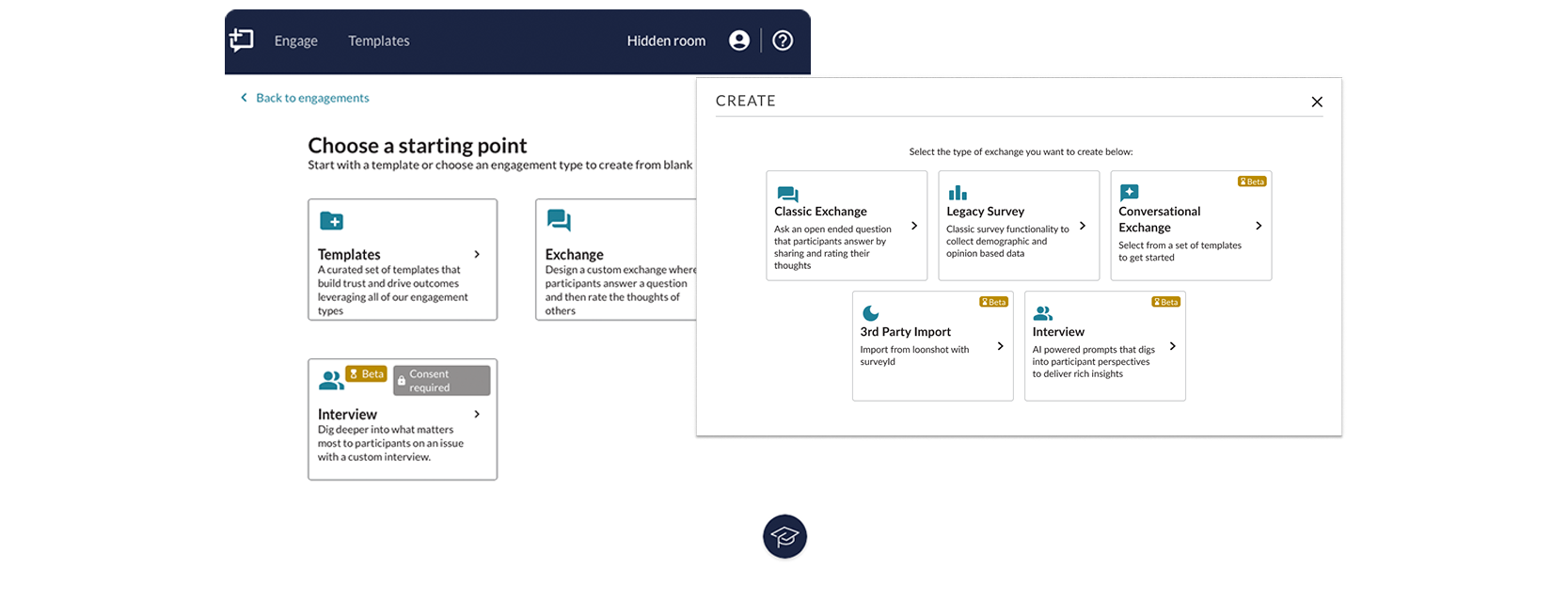
Through competitive research, I found that strong onboarding experiences rely on templates surfaced across multiple entry points to support faster, more confident setup. Based on this, I introduced two entry points: a dedicated template library for exploration and in-flow access during Exchange creation.
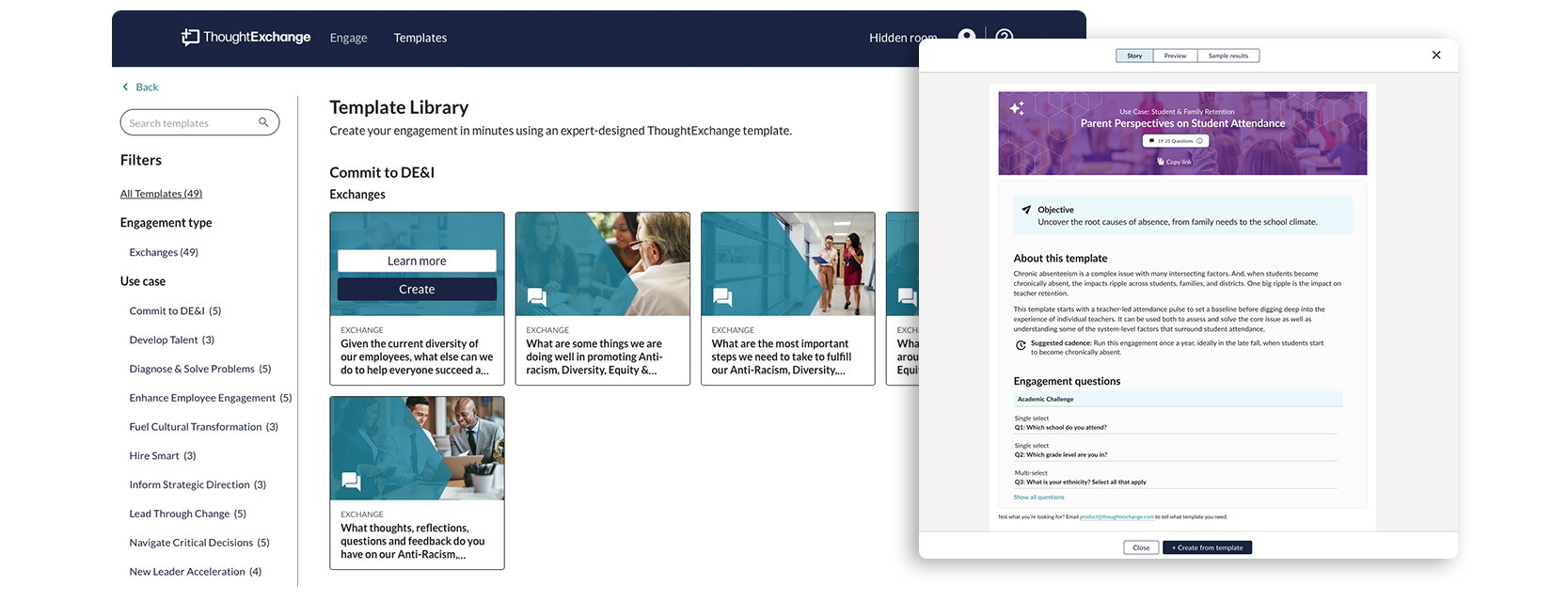
I validated the direction through interactive prototypes tested with customers and internal teams, uncovering needs for clearer structure, improved descriptions, and the ability to preview templates before use. These insights shaped both information architecture and interaction design.
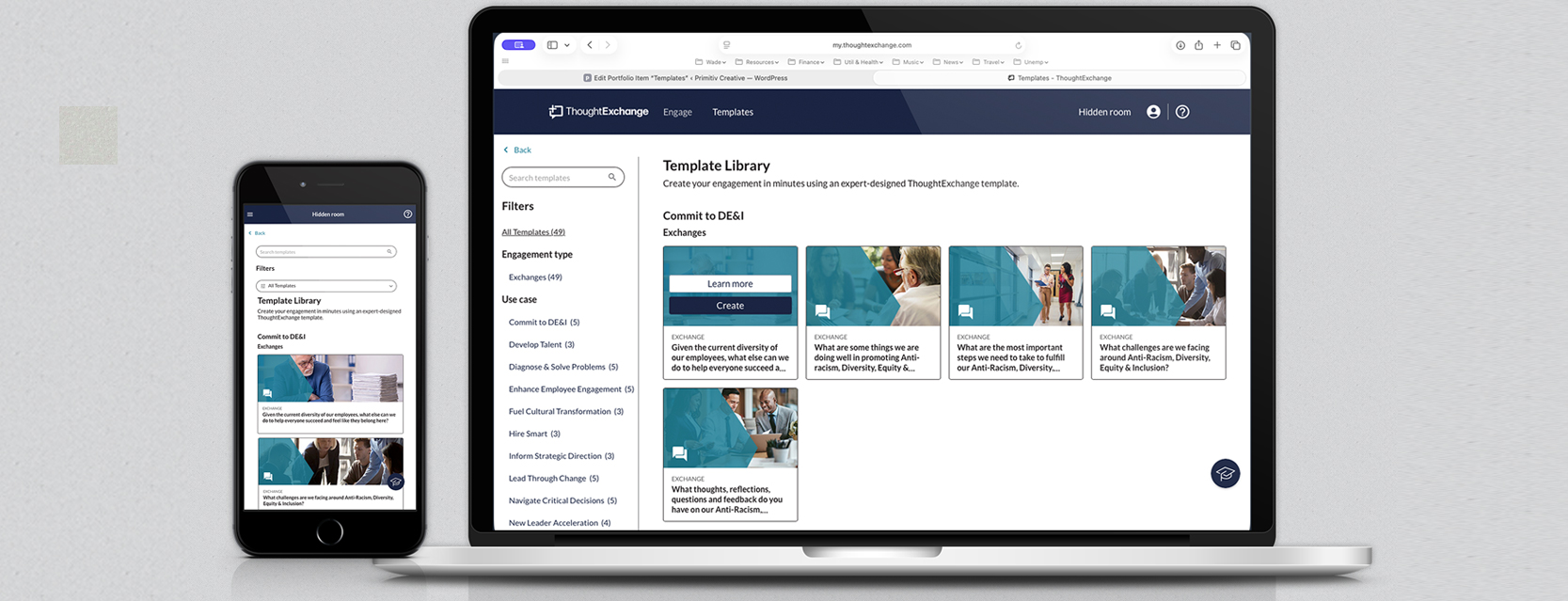
The final solution delivered a scalable template system with a categorized gallery, rich previews, and reusable components, built in close collaboration with Engineering to ensure consistency and extensibility.
Impacted outcome
Introducing templates fundamentally improved the creation experience. We were able to:
- Reduce frustration and hesitation during survey creation
- Provide clear guidance and inspiration for new Exchanges
- Improve discoverability through multiple entry points
- Established a scalable framework for expanding the template library